What Is Worth Bringing Back from Morocco? Only Buy These
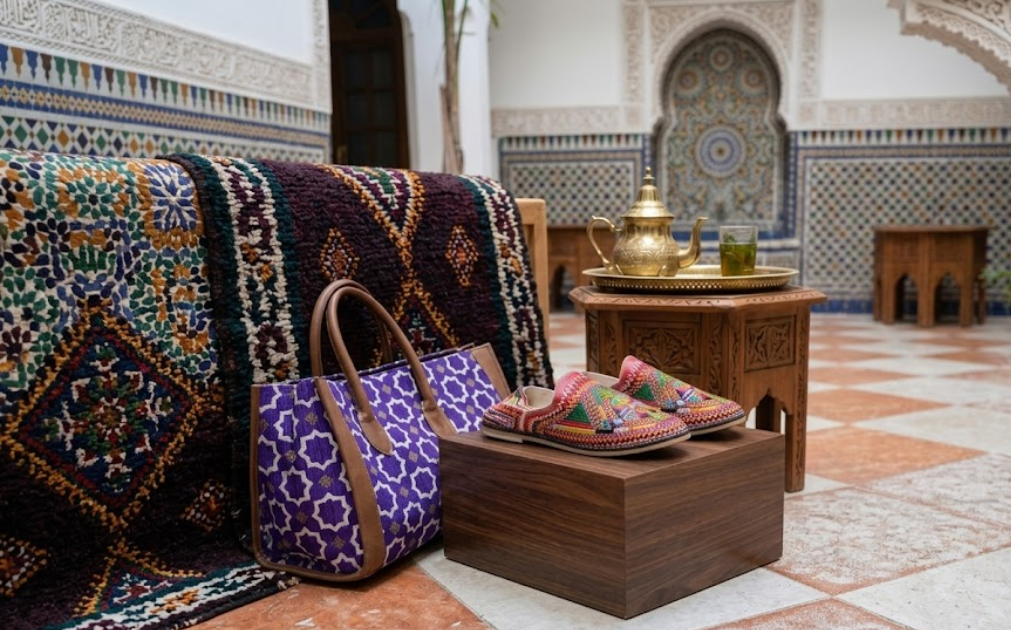
The things worth bringing back from Morocco are those that cannot be replicated — handmade ceramics from Fès, brass lamps, leather poufs, cactus silk, and handwoven rugs. Here is what to buy, what to avoid, and how to tell the difference.
By Ziad El Khattabi
The things worth bringing back from Morocco are those that could not have been made anywhere else — produced by specific artisans using specific techniques in specific cities, with centuries of craft knowledge built into them.
Most of what is sold in Moroccan tourist markets and on major online platforms is not this. It is mass-produced in factories, labelled as artisanal, and sold to buyers who have no way to verify what they are actually purchasing. The person who made the real version sees none of the revenue. The person who sold you the imitation sees all of it.
Understanding the difference matters — not just for your own purchase, but because what you buy either supports a living craft tradition or helps displace it.
Worth It — Always
Hand-Painted Ceramics from Fès or Safi
A hand-painted ceramic plate from Fès, a tagine from Safi, or a set of tea cups from a workshop that has been firing pottery for three generations — these are objects that will be used for decades. The markers of genuine handwork: natural weight from wheel-throwing, slight variation in glaze pooling, and freehand patterns with the minor imperfections that only human hands produce.
Fès ceramics are blue and white, geometric, and precise. Safi ceramics are warmer — greens, ochres, terracotta. Both are immediately distinguishable from factory output once you know what you are looking at.
Brass or Copper Lighting
A hand-pierced Moroccan brass pendant lamp is one of the most transformative objects you can add to a home. The craft is centred in Fès, where a master artisan in the Seffarine district spends four to six days piercing a single shade by hand. When lit, it projects an intricate pattern of light and shadow across every surface — an effect no industrial product replicates.
Interior designers named warm aged brass as one of the defining materials of 2026, citing exactly this quality. Smaller pieces — lanterns, wall sconces, tea light holders — travel more easily and are equally impactful.
A Leather Pouf
Genuine Moroccan leather poufs are made from naturally tanned leather in tanneries that have operated since the eleventh century. They are heavy for their size, have visible hand-stitching, and smell of natural leather rather than synthetic materials. They ship unfilled — flat-packing easily — and last for decades. The leather improves rather than deteriorates over time.
Cactus Silk Pillow Covers
Cactus silk — sabra, from the agave plant — is woven by women's cooperatives in southern Morocco. The resulting fabric is luminous, shifts colour in changing light, and is completely unlike any mass-produced textile. Light, flat, easy to pack, immediately distinctive in any home. One of the most underrated purchases from Morocco — less well-known than ceramics, which means it is still honestly priced and still produced at genuine craft scale.
Argan Oil from a Named Cooperative
Genuine Moroccan argan oil, cold-pressed by women's cooperatives in the Souss Valley, is one of the finest natural oils in the world. The market is heavily adulterated — diluted, blended, fraudulently labelled. Source matters entirely. Look for oil from a named cooperative with certification. If the price seems too low, it is not what it claims to be.
Not Worth It — Avoid These
Generic "Moroccan" rugs at tourist prices. Most rugs sold at tourist price points in the medinas of Marrakech are machine-made imitations. Genuine handwoven Berber rugs require weeks or months of work and are priced accordingly.
"Silver" jewellery without assay certification. Much of what is sold as Moroccan silver is nickel-plated alloy. Without certification, you cannot verify what you are buying.
"Leather" goods at tourist prices. Genuine naturally-tanned Moroccan leather is a premium material. Bags and slippers sold at tourist market prices are almost always synthetic or treated leather.
Mass-produced ceramics. If the pattern is perfectly uniform, the weight feels light for the size, and the price is very low — it came from a mould in a factory, not a wheel in Fès. The Moroccan government classified 32 ceramic and craft specialities as threatened with extinction in 2025 precisely because the market is flooded with cheap imitations that buyers cannot distinguish from the real thing.
The Fundamental Problem With Buying in Markets
The souk experience is one of the great pleasures of visiting Morocco. But there is no way to know, in a stall in the Marrakech medina, whether a ceramic plate came from a workshop in Fès or a container ship from Guangzhou. Intermediaries currently capture 80–90% of what buyers pay. The artisan who made the genuine piece receives 5–12%.
The answer is verified origin documentation — a certified record linking each object to the specific artisan who made it, with proof the buyer can check. At Kilimy, every product comes with an Origin Passport: the artisan's name, the GPS coordinates of their workshop, and a QR code you scan when the package arrives.
When a buyer in Portland once summed up what she wanted, she said it perfectly: "I just wanted to know who made this. That's all." What is worth bringing back from Morocco is anything for which that question has an answer.
Continue Reading

Ships from Tétouan
Verified Artisan · Tétouan
Tétouan Raffia Basket - Hand-Coiled Mountain Palm

Ships from Marrakech
Verified Artisan · Marrakech
Hand-Woven Raffia Box with Colorful Wool Patterns

Ships from Marrakech
Verified Artisan · Marrakech
Raffia Palm Leaf Basket from Marrakech Artisans