KILIMY
← Journal
Home DecorMarch 20, 2026· 5 min read

What Is Special to Buy from Morocco? A Guide to Authentic Moroccan Crafts

Morocco's most special purchases are handmade crafts with centuries of history behind them — ceramics from Fès, brass lamps, leather poufs, cactus silk pillows, and zellige tilework. Here is what to look for and how to make sure what you buy is real.

By Ziad El Khattabi

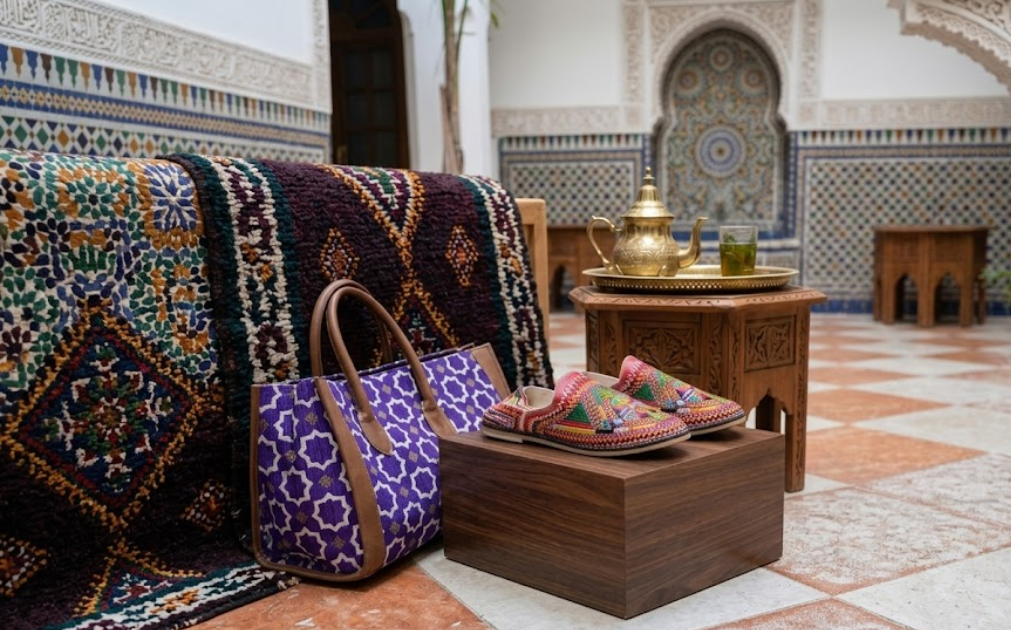
The most special thing you can buy from Morocco is something that could not have been made anywhere else — a piece that carries the name of the artisan who made it, the city where it was crafted, and a technique passed down through generations.

Morocco's craft tradition is one of the richest in the world. The country supports approximately 2.3 million artisans — around 7% of the national workforce — producing handmade goods that have no industrial equivalent. The best of them are not souvenirs. They are objects that belong in a home, on a table, or on a wall for decades.

The Problem Behind Every "Moroccan" Product You Have Seen Online

Kilimy was built because of a moment in a workshop in Fès. A master brass artisan — third generation, working with tools his father gave him — spent four to six days making a single pendant lamp. The kind of piece that sells in a boutique in Paris or New York for €400 to €600.

He sold it to the intermediary for 180 MAD. About €16.

He did not know who bought it. He did not know what it sold for. He was not sure his sons should learn the craft. That moment is not exceptional — it is the structural reality for 2.3 million Moroccan artisans. Intermediaries capture 80–90% of what international buyers pay. The artisan receives 5–12% of the final retail price.

The Moroccan government officially classified 32 craft specialities as threatened with extinction in 2025. Only four master artisans remain active in each. The market pressure from cheap factory imitations is a direct contributor to this disappearance.

The Six Things Worth Buying — and Why

1. Ceramic Pottery from Fès and Safi

Moroccan ceramics are the country's most recognised craft. The cities of Fès and Safi have developed distinct visual languages over more than a thousand years. Fès pottery is typically blue and white, with geometric patterns applied by hand using a fine brush. Safi ceramics tend toward warmer earth tones with more painterly designs.

Each piece is wheel-thrown, hand-painted before and after firing, and glazed using recipes individual workshops have refined over generations. No two are identical. Mass-produced imitations — most from factories in China and Vietnam — are too uniform, too light, and too perfect.

2. Brass and Copper Lighting from Fès

Moroccan brass pendant lamps are among the most coveted home décor items in the world right now. Interior designers across the US and Europe named warm aged brass as one of the defining materials of 2026. The craft is concentrated in Fès, where master artisans spend four to six days hand-piercing a single shade. When lit, the pierced patterns cast intricate shadows that no industrial light source can replicate.

A genuine Moroccan brass lamp has uneven weight, small variations in the pattern, and a finish from hand-polishing rather than machine buffing.

3. Leather Poufs from Marrakech

Genuine Moroccan leather poufs are made from naturally tanned goat or sheep leather in tanneries that have operated continuously since the eleventh century. The leather is hand-stitched with patterns embossed into the surface. The smell of natural leather is distinct from synthetic alternatives, and the texture improves with age.

4. Cactus Silk Pillows and Textiles

Cactus silk — sabra — is extracted from the agave plant and woven by cooperatives in southern Morocco, primarily around Tiznit. The resulting textile is luminous, naturally hypoallergenic, and shifts colour in changing light. It is woven by hand on traditional looms, predominantly by women's cooperatives where it provides the primary source of independent income.

5. Zellige Tilework

Zellige is Morocco's hand-cut geometric mosaic tile — the defining element of Moroccan architecture for over a thousand years. Interior designers explicitly named it as a material of 2026. The Moroccan National Tourist Office names Fès as "undoubtedly the capital of zellige" — and the reach of this craft is genuinely global. Master craftsman Haj Ben Adiba has installed zellige at the Islamic Museum in London, the Zellij Fountain in Chicago, and a Moroccan Royal Garden in Japan. Each piece is individually cut by a craftsperson called a mâalem using a hammer and chisel. The slight variations in cut and surface are what give zellige its characteristic depth.

6. Handwoven Rugs — Beni Ourain and Berber

Beni Ourain rugs — cream or ivory with black geometric patterns — have become a staple of international interior design. Azilal rugs, from the High Atlas, are more colourful and personal. A genuine handwoven Moroccan rug takes weeks to months to complete. The wool is hand-spun, often hand-dyed, with each knot tied individually.

How to Know You Are Buying Something Real

The single biggest problem in the Moroccan craft market is that most of what is sold as "Moroccan handmade" was not made in Morocco. It was made in a factory, relabelled, and sold to a buyer who had no way to verify what they were purchasing.

At Kilimy, every product ships with an Origin Passport: the artisan's name and photograph, the GPS coordinates of their workshop, the technique used, and a QR code the buyer scans on arrival. It is the only standard in this market that answers the question a buyer in Portland once put better than anyone: "I just wanted to know who made this. That's all."

Where to Buy Authentic Moroccan Crafts

If you are visiting Morocco, the medinas of Fès, Marrakech, Safi, and Tiznit are where the best craftspeople work. Look for artisans actively making pieces, not just displaying them.

If you are shopping internationally, Kilimy connects buyers directly to certified artisans — with proof of origin for every piece, and direct payment to the person who made it. Browse ceramics, lighting, textiles, and leather goods — all verified, all with an Origin Passport.

Continue Reading

March 27, 2026

What Do Moroccans Like as Gifts? And What to Give Someone Who Loves Morocco

Read →

March 22, 2026

What Is Worth Bringing Back from Morocco? Only Buy These

Read →
Shop from this collection →
Tétouan Raffia Basket - Hand-Coiled Mountain Palm
Best Value

Ships from Tétouan

Verified Artisan · Tétouan

Tétouan Raffia Basket - Hand-Coiled Mountain Palm

$65.67
★★★★★4.8 (92)
Hand-Woven Raffia Box with Colorful Wool Patterns
Best Seller

Ships from Marrakech

Verified Artisan · Marrakech

Hand-Woven Raffia Box with Colorful Wool Patterns

$115.67
★★★★★4.7 (76)
Raffia Palm Leaf Basket from Marrakech Artisans
Best Value

Ships from Marrakech

Verified Artisan · Marrakech

Raffia Palm Leaf Basket from Marrakech Artisans

$236.66
★★★★★4.9 (109)