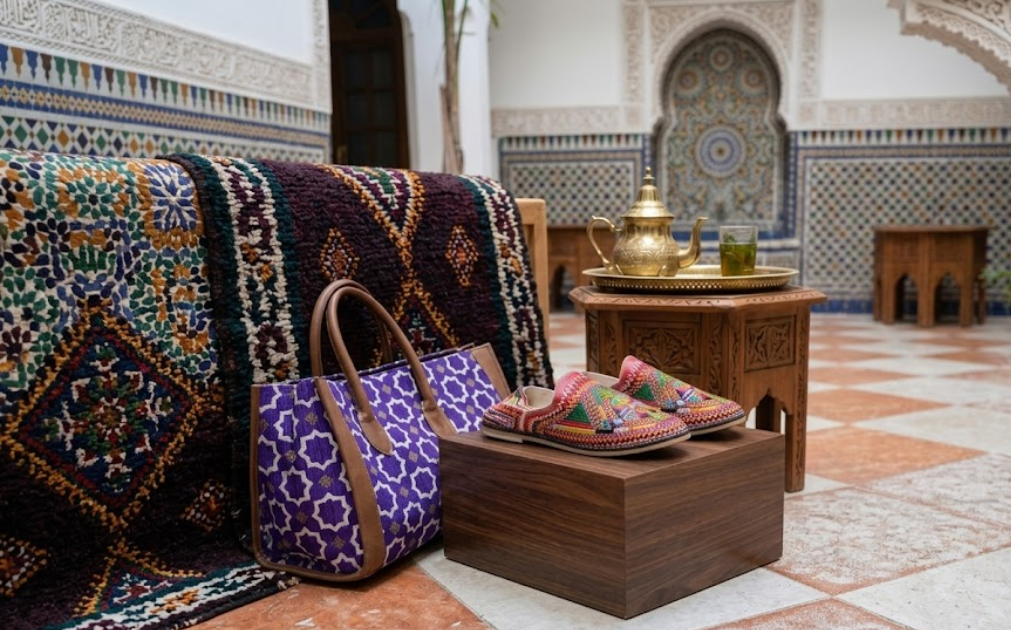
What Do Moroccans Like as Gifts? And What to Give Someone Who Loves Morocco
Moroccans appreciate gifts that show thoughtfulness and quality — argan oil, fine ceramics, artisan leather goods, or traditional sweets. For someone who loves Moroccan craft, a verified handmade piece from a specific artisan is the most meaningful gift you can give.
By Ziad El Khattabi
Moroccans value gifts that show care and quality — not price. The most appreciated gifts reflect the specific tastes of the recipient, are presented well, and carry a sense of thoughtfulness. This guide covers what Moroccans genuinely appreciate, and what to give someone who loves Moroccan craft or design.
What Moroccans Appreciate as Gifts
Fine Food — Sweets, Honey, Argan Oil
Food is the most universally appreciated gift across Moroccan culture.
Amlou — a paste of argan oil, ground almonds, and honey, eaten with bread at breakfast. Labour-intensive to produce and a genuine delicacy. A jar of high-quality amlou from a reputable producer is thoughtful and distinctive.
Artisanal honey — Morocco produces excellent thyme, eucalyptus, and jujube honeys from specific regions. A jar of named, single-origin honey from a known producer is appreciated by almost any household.
Genuine argan oil — cold-pressed culinary argan oil from a certified women's cooperative in the Souss Valley is valuable and distinctive. The market is heavily adulterated, so provenance matters entirely. If the price seems too low, it is not what it claims to be.
Pastries — kaab el ghzal (gazelle horns), sellou, and other traditional Moroccan pastries are appreciated for hospitality and celebrations. Best purchased fresh from a good patisserie rather than packaged.
Quality Craft Objects
A well-chosen craft object — a ceramic bowl, a hand-woven basket, a small brass lantern — is appreciated if it is clearly of good quality and appropriate for the recipient's home. Moroccans are discerning about craft quality. A mass-produced imitation will not impress.
The key is appropriateness: a hand-painted ceramic tea set for someone who hosts frequently, a set of embroidered linen napkins for someone who cares about table setting, a fine leather wallet for someone who appreciates the material.
Fabric and Clothing
Quality fabric — fine wool, silk, or embroidered cloth — is valued as a gift. Ready-made clothing — a quality kaftan, a hand-embroidered djellaba — can be an excellent gift if you know the recipient's taste and size well enough.
What to Give Someone Who Loves Morocco or Moroccan Design
For international buyers giving a gift inspired by Morocco — to someone who has visited, who is designing their home, or who appreciates the craft tradition — the most meaningful gifts are objects with a verified story behind them.
A Verified Handmade Ceramic Piece
A genuine hand-painted ceramic from Fès or Safi, with documented provenance, is one of the most versatile and appreciated gifts in the tradition. A set of hand-painted tea glasses, a serving platter, or a tagine from a specific workshop — these are objects that will be used and appreciated for decades.
What makes a Kilimy ceramic different from one purchased in a tourist market: every piece ships with an Origin Passport linking it to the specific artisan who made it. The gift includes the story — the name of the person, their workshop, their city.
A Leather Pouf
A genuine naturally-tanned Moroccan leather pouf is a statement piece for any living room. It ships unfilled — flat-packing easily — and fills into a seat, footrest, or side table that lasts for decades. The leather improves with age. A buyer in Portland who asked simply "I just wanted to know who made this. That's all." — that is the experience a verified piece provides.
Cactus Silk Pillow Covers
A pair of cactus silk pillow covers — luminous, iridescent, from a southern Moroccan cooperative — are distinctive, practical, and unlike anything else the recipient is likely to own. They pack flat, arrive without customs issues, and transform the feel of any room. The cooperatives that produce sabra are predominantly women's organisations where this work provides the primary source of independent income — which makes it a gift with layers of meaning.
A Brass Candle Lantern
A hand-pierced Moroccan brass lantern — smaller than a pendant lamp, more gift-appropriate — creates the same patterned light effect at a fraction of the size. Lit with a single candle, it is a transformative object for any table, shelf, or windowsill. Interior designers named warm aged brass as one of the defining materials of 2026 — a recognition of exactly what genuine Moroccan metalwork does to a room.
The Principle Behind Any Good Moroccan Gift
The most appreciated gifts — within Moroccan culture or for someone who loves Moroccan craft — are those that show you paid attention. An object sourced from a specific place, made by a specific person, chosen for its specific relevance to the recipient.
Kilimy was built on a founding principle: the master artisan in Fès who spent five days making a piece and received €16 for it deserved better. Direct commerce changes that. At Kilimy, every product comes with an Origin Passport — the artisan's name, their city, their workshop, and the technique they used. That documentation is part of the gift. When you give a Kilimy piece, you are giving not just an object but the story of the person who made it.
That is what makes a gift Moroccan in the fullest sense.
Continue Reading

Ships from Tétouan
Verified Artisan · Tétouan
Tétouan Raffia Basket - Hand-Coiled Mountain Palm

Ships from Marrakech
Verified Artisan · Marrakech
Hand-Woven Raffia Box with Colorful Wool Patterns

Ships from Marrakech
Verified Artisan · Marrakech
Raffia Palm Leaf Basket from Marrakech Artisans